
An independent directory of US degree programs
Find Criminal Justice Schools and Degree Programs
Compare criminal justice, criminology, and forensic programs across the United States.
495 verified programs at 150 schools in 51 states (counted from published records) — every fact linked to the school's own pages. Coverage is growing and is not complete.
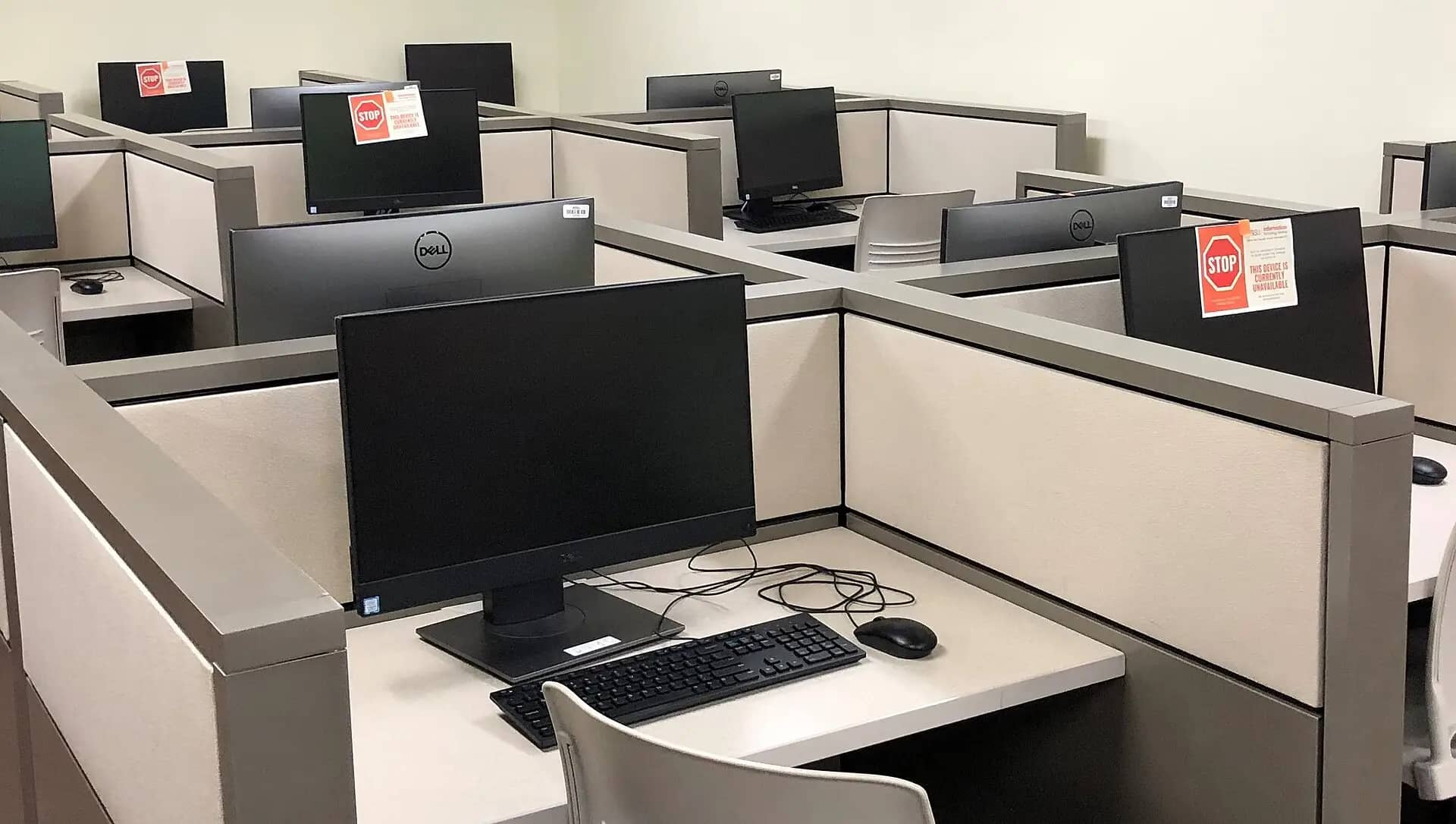
Photo: A computer lab at Bowling Green State University, Ohio (March 2020) · Mbrickn · CC BY 4.0 · source
Browse degree levels
Associate, bachelor's, master's and PhD programs
Explore subjects
Twelve subjects, kept distinct
Criminology is not criminal justice, and a forensic concentration is not a laboratory science degree. Programs are mapped to a subject only from official curricula.
Find schools by state
Browse by state
States with the most verified programs so far. Online programs appear under the school's state, which is not a residency requirement.
Online study
Online bachelor's and master's degrees
241 programs across the directory with a verified online option; 10 state that no campus visit is required. Online coursework can still come with residencies, in-person labs (especially in forensic science), proctored exams or live classes — we record each separately, only as the school publishes it.
All online degreesOnline associateOnline criminologyOnline forensic science
Researched school and program highlights
Recently verified programs
Selected by verification date and number of sourced facts, not by quality. 43 listed programs appear on FEPAC’s accredited-program list.
Master of Science in Forensic Science
Compare programs
Compare up to four programs side by side
Degree, subject, forensic type, format, campus visits, schedule, credits, tuition basis, tests, deadlines, funding and FEPAC in one table. No account needed — your list stays in this browser. We never pick a “winner” from incomplete data.
Admissions, transfer and career-pathway guides
Guides for applicants
Original guides built on primary sources. They explain the choices; they do not predict outcomes.
Best-program editorial selections
Unranked selections with published criteria
We do not rank. These pages list programs and schools that meet stated, checkable criteria, in alphabetical order, with the sources and limitations shown. Sponsorship has no effect on them. Methodology
- Criminal justice collegesSchool-level selection
- Criminal justice programsProgram-level selection
- Online criminal justice degreesVerified online delivery
- Online bachelor'sFirst-year and completion
- Online master'sMA, MS, MCJ
- Criminology collegesWhere adequately researched
- Forensic science collegesWhere adequately researched
For schools
Reach prospective criminal justice and forensic students
Listings are free and factual. Schools can add a missing program, correct a fact, claim their profile, or sponsor a clearly labelled placement on relevant degree, online, subject and state pages. Sponsorship never buys editorial position or a place in a selection.
Institutional accreditation
Required for every school listed. Checked against the U.S. Department of Education's accreditation database (DAPIP).
Sources for every fact
Each fact links to the school's own page and shows when it was checked. Unknown stays unknown — never “free” or “closed”.
Independent
Not a college, a law enforcement agency or an admissions service, and no government endorsement is implied.
Questions, answered
Which programs does this directory include?
Associate, bachelor's and master's degrees and research doctorates in criminal justice, criminology, forensic science and closely related subjects at US schools with current institutional accreditation from a recognized accreditor — campus, online or hybrid. Degrees in the subject and formal concentrations inside broader degrees are both listed, and always labelled. Certificates, minors, police academy training without a degree, law degrees and paralegal programs are not.
Are criminal justice, criminology and forensic science the same thing?
No. Criminal justice studies justice systems and practice, criminology studies crime and offending, and forensic science is the scientific examination of evidence with laboratory coursework. A criminal justice degree with a forensic concentration is not a laboratory forensic science degree, and each profile says which it is.
What does FEPAC accreditation mean?
FEPAC accredits individual forensic science programs. We show it only when FEPAC's own list includes that exact program. It does not cover criminal justice or criminology programs, and the absence of FEPAC accreditation does not mean a program is illegitimate; it is not required for a listing.
Does “online” mean I never have to go to campus?
Not always. We record campus visits, residencies, in-person labs, internships and live-session schedules separately, exactly as each school states them. If a page does not say, we show it as not verified — never as “none”. An online application or a few remote electives do not make a degree online.
Does a degree qualify me to be a police officer or work in a crime lab?
Not by itself. Police academy admission, sworn certification, federal hiring, security clearances, forensic laboratory positions and eligibility to practice as a psychologist have separate requirements set by the agency, employer or licensing board.
Is the tuition shown the total cost?
No. Tuition is shown with its basis (per credit, per term, per year or whole program), student category and academic year. A total is calculated only when the program publishes both a per-credit rate and its credits, and it still excludes fees and other costs of attendance.
Do you rank schools?
No. Listings are alphabetical by default. The Best Colleges pages are unranked editorial selections built on published criteria. Paid placements are labelled Sponsored, sit in their own section and never change the order of the directory or the selections.
See also: methodology and sourcing · by state.